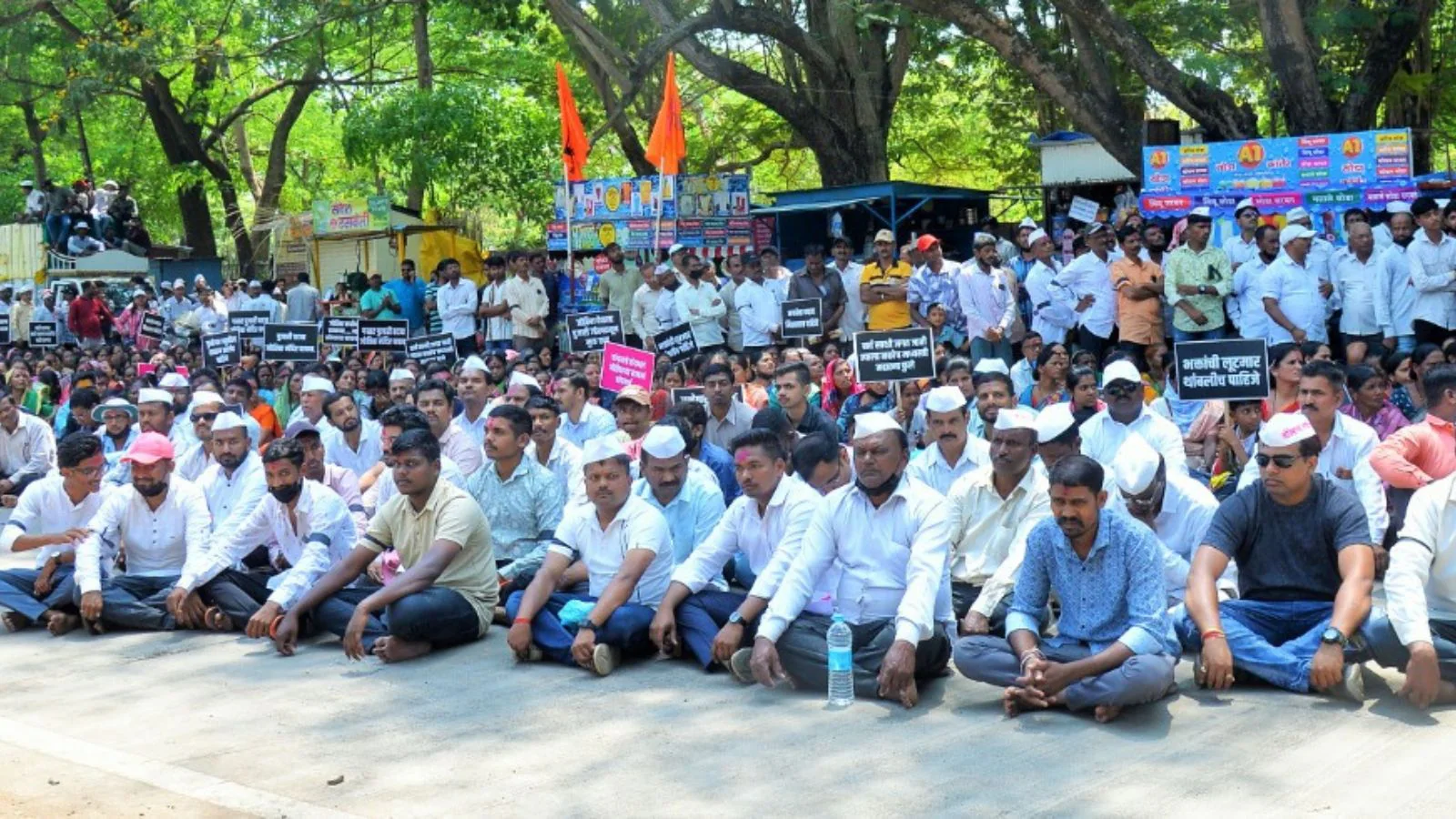
Thousands protest in Kolhapur after priests thrash devotees at Jyotiba temple
A violent scuffle between priests and devotees at Jyotiba temple in Wadi Ratnagiri village in Kolhapur on Sunday triggered widespread outrage after videos of the brawl went viral on social media. The incident prompted residents of Parite village to observe a bandh on Monday, while thousands from Parite and surrounding villages marched to the district collectorate, raising the slogan “Pujari Hatao, Jyotiba Bachao”, demanding the removal of the priests involved in the violence.
The fight broke out around 11.30 am when a group of devotees from Parite village in Shahuwadi tehsil arrived at the temple carrying Sasankathi, a decorated pole that serves as the flag of Lord Jyotiba.
According to the priests, the group disrupted the scheduled aarti procession route from Kalbhairav temple to Jyotiba temple, threw gulaal-smeared broken coconuts at priests, and ignored repeated warnings. They also allege that the commotion caused tables and other aarti arrangements to be knocked over, and that some priests’ traditional dhotars (garment worn around the waist) were pulled off in the chaos.
The devotees, however, tell a different story. Manoj Patil, sarpanch of Parite village, said a devotee who was playing the halgi, a traditional folk instrument, lost his balance while dancing, accidentally pushing a priest. He added that the village had observed a three-day ban on the consumption and sale of liquor during the fair period, making the priests’ claims — that the devotees were intoxicated — baseless.